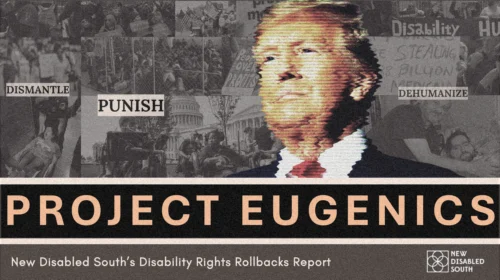
PDF Download of Plain Language Summary
Executive Summary
This report documents a deliberate assault on disabled people in the United States. Not an accident. Not a series of bureaucratic missteps. An assault that has been coordinated across agencies, policy domains, and governing priorities and has undoubtedly made disabled life more precarious, more surveilled, and more disposable.
This harm is not confined to a single law or administration memo. It is produced through the steady dismantling of civil rights enforcement, the erosion of accessibility infrastructure under the language of “efficiency,” and the intentional obstruction of benefits and care through administrative cruelty. Delay. Denial. Attrition. Outcomes that policymakers know and accept will result in suffering and death.
At the same time that rights infrastructure is hollowed out, punishment expands. Detention. Policing. Involuntary commitment. Institutionalization. These policies are framed as solutions to poverty, homelessness, migration, and “disorder,” but they function as tools of containment. Tools that are not centered on managing disability through care or investment, but through coercion. Disabled people who are unhoused, poor, immigrants, Black, queer, or otherwise multiply marginalized are targeted first and hardest.
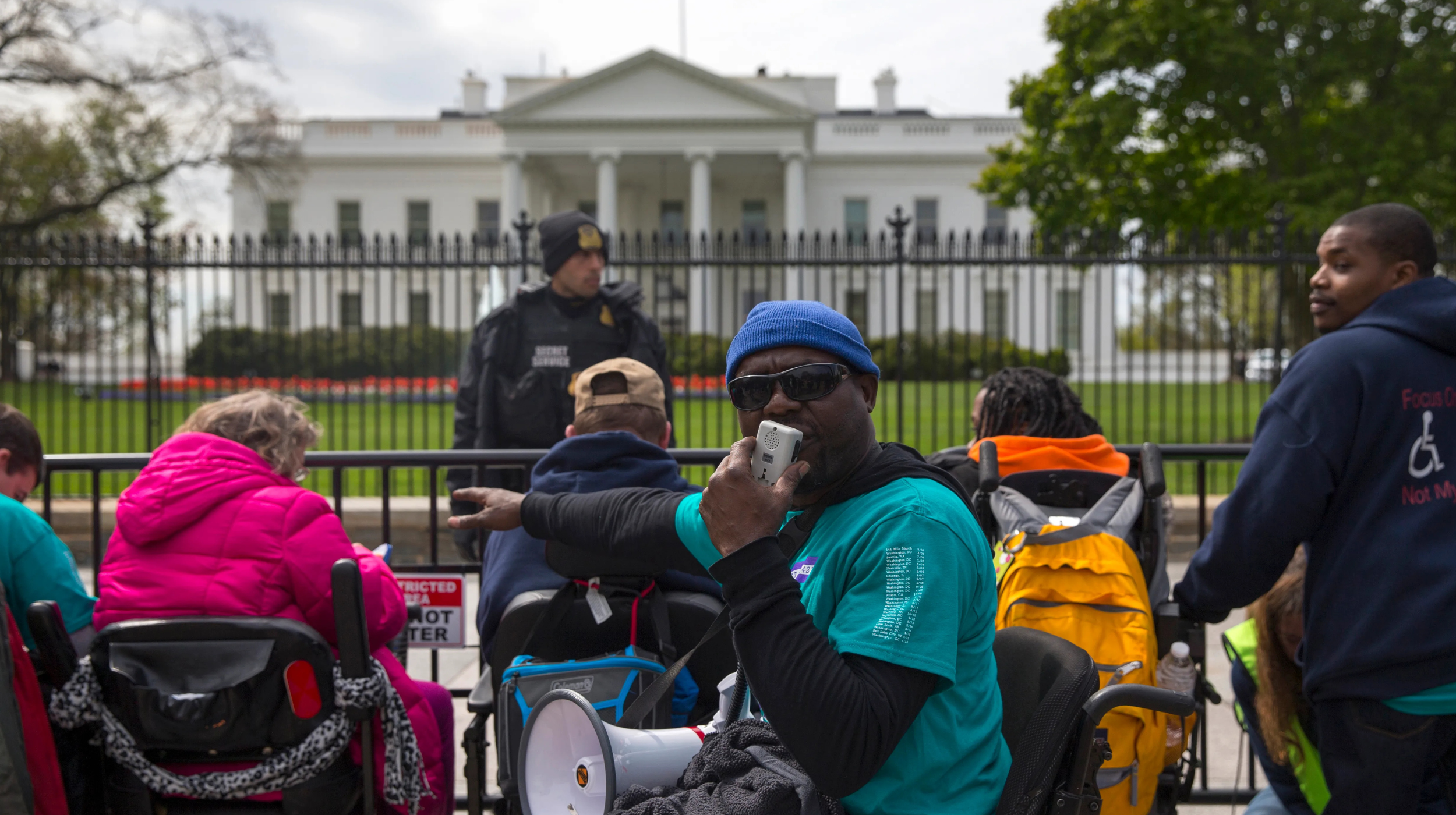
These outcomes are not unintended consequences. They reflect a governing logic built on three mutually reinforcing strategies.
Dismantling. The quiet removal of legal protections, enforcement mechanisms, and administrative capacity that once made disability rights actionable rather than symbolic.
Punishment. The use of criminalization, surveillance, institutionalization, and survival denial to discipline disabled people whose lives fall outside the bounds of productivity, compliance, or convenience.
Dehumanization. The spread of fear-based narratives and eugenic assumptions that frame disabled people as burdens, liabilities, or threats, rather than as members of the political community entitled to dignity and self-determination.
These methods operate across immigration, education, housing, health care, employment, and public benefits. The consequences are measurable and devastating: preventable illness, deepened poverty, forced segregation, and premature death. Disabled people of color bear the brunt of this violence, as they always have.
There is nothing new about this pattern. Disability justice has never been separate from racial and economic justice. The policies examined here echo earlier regimes of exclusion: the Ugly Laws, forced sterilization, mass institutionalization, and austerity politics that treated care as expendable and certain lives as negotiable. History is clear: when disability protections erode, violence follows.
This report is not written to persuade policymakers that disabled people deserve protection. That question has already been answered by law, by history, and by the communities that have survived despite abandonment. This report is written to name what is happening, to trace the harm to its source, and to refuse the normalization of policy choices that produce suffering.
It is an indictment of this administration.
And it is a call upon not just disabled people, but to us all, to resist, to repair, and to rebuild systems rooted in care, accountability, and dignity, led by those most impacted.
Introduction
Disability rights in the United States have reached a critical inflection point. Protections that were never freely given are now being systematically weakened, stripped of enforcement, or recast as optional. Through decades of organizing, litigation, and survival, these liberties were wrested into existence. These rollbacks are not isolated policy failures or bureaucratic oversights. They are part of a broader political project that treats disabled people as expendable when care, equity, and accountability become inconvenient.
History makes this pattern unmistakable. When political priorities shift, disabled people, particularly disabled people of color, poor and working-class disabled people, immigrants, and those living at the intersections of multiple systems of oppression, are among the first to be rendered invisible, disposable, or dangerous. Disability is repeatedly framed not as a lived reality deserving of dignity and support, but as a problem to be managed, contained, or erased.
Dismantling creates the conditions for punishment. Dehumanization renders both politically acceptable.
Disability justice has never existed apart from racial justice. From early twentieth-century institutionalization and eugenics regimes, to segregationist public policy, to the uneven and often hostile enforcement of the Americans with Disabilities Act after its passage in 1990, disabled people have experienced rights not as guarantees, but as contested terrain. Even landmark victories have been met with resistance.
The Supreme Court’s decision in Olmstead v. L.C. affirmed the right of disabled people to live in the most integrated setting appropriate. Yet decades later, institutionalization, warehousing, and neglect remain persistent threats, particularly in the South and other regions where underinvestment and punitive policy dominate.
This report situates the current political moment within that historical continuum. We examine federal actions through a framework of erasure, distortion, and suppression, organizing them into three interconnected strategies that define today’s assault on disability rights:
-
Dismantling refers to the deliberate removal of legal protections, enforcement mechanisms, and public infrastructure that disabled people have long fought to establish. This often occurs under the guise of efficiency, neutrality, or reform.
-
Punishment captures policies that actively harm disabled people through coercion, criminalization, institutionalization, and the denial of basic care and survival needs, disproportionately targeting those who are poor, unhoused, or multiply marginalized.
-
Dehumanization encompasses the rhetoric and misinformation that frame disability as a burden, a threat, or a moral failing. This manufactures false legitimacy to discourses that create social and political permission for neglect, violence, and premature death.
These methods do not operate independently. Dismantling creates the conditions for punishment. Dehumanization renders both politically acceptable. Together, they reveal the underlying logic of the moment: when systems of care are destroyed, when rights are treated as conditional, and when disabled lives are framed as less valuable, disposability becomes policy.
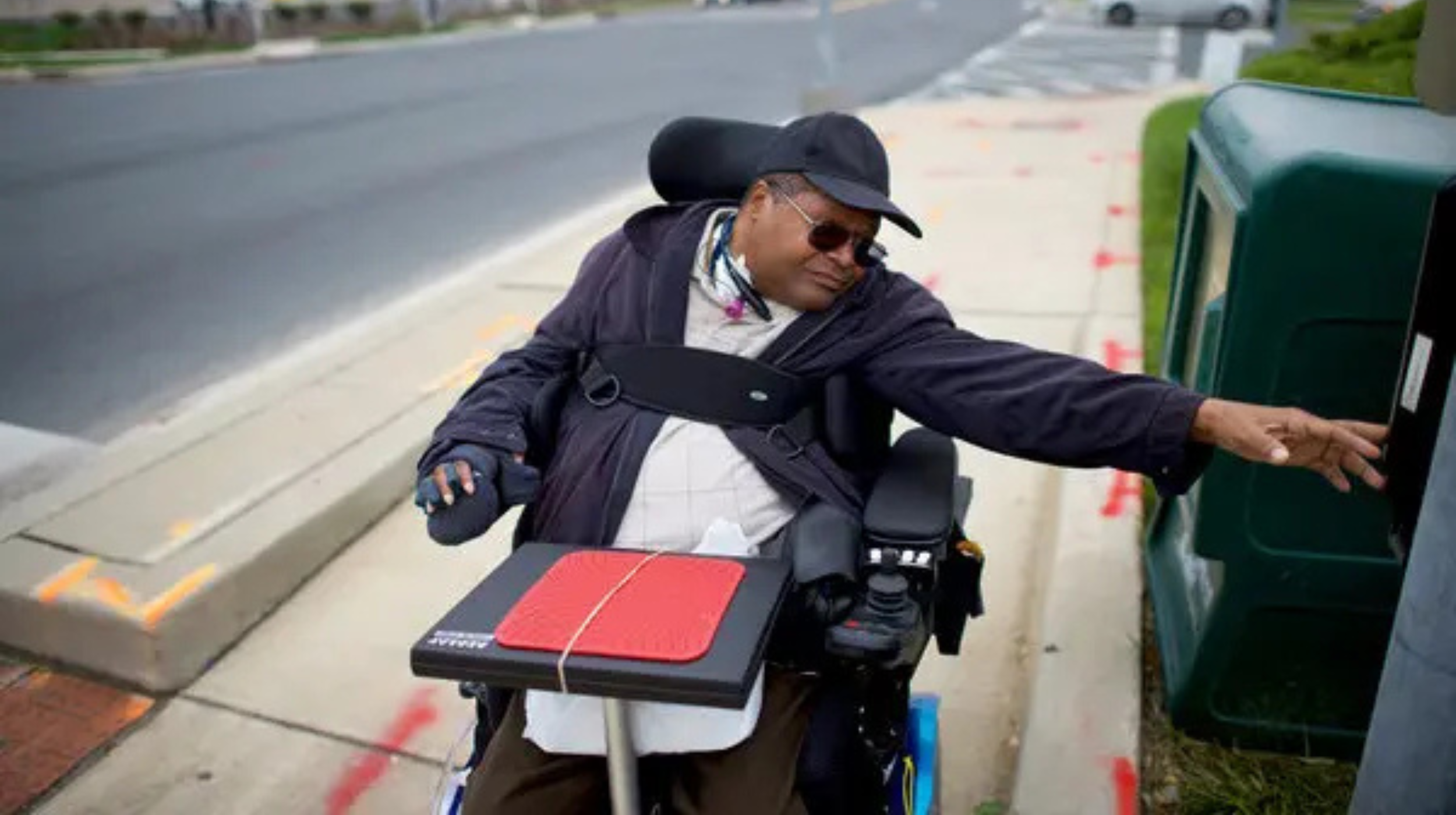
The question before us is not whether disability rights are under threat; we know that they are. The question is who bears the cost when those protections are systematically dismantled, and whether we will allow history to repeat itself under new language and familiar justifications.
Dismantling: the deliberate removal of rights, protections, and infrastructure that disabled people have historically fought for.
Dismantling is not passive neglect. This is an active governing strategy. By eliminating offices, defunding enforcement, and hollowing out administrative capacity, the federal government has ensured that disability rights exist largely on paper while becoming increasingly inaccessible in practice.
Ending DEIA and Accessibility Infrastructure
The termination of all federal Diversity, Equity, Inclusion, and Accessibility programs represents a direct attack on accessibility itself. These programs were not symbolic or ancillary efforts. They functioned as the primary mechanisms through which disabled people accessed accommodations, enforced civil rights protections, and participated in federal employment and services.
Accessibility offices, equity action plans, and training initiatives provided agencies with the internal capacity and institutional knowledge necessary to comply with disability law. Their elimination strips agencies of that capacity and signals that accessibility is no longer being treated as a legal obligation, but as a discretionary choice.
The consequences of these actions are already evident. Disabled people face increased difficulty securing reasonable accommodations, navigating inaccessible communications and digital systems, and entering or remaining in federal employment. Without dedicated infrastructure to identify barriers and ensure compliance, disability inclusion is deprioritized at every stage of policy development and implementation.
This erosion does not occur evenly. It disproportionately harms disabled people who are already marginalized by race, income, geography, or immigration status, and it reinforces long-standing patterns of exclusion across federal systems.
These harms have been further compounded by extensive personnel cuts to civil rights enforcement bodies under the administration’s Department of Government Efficiency initiative. According to the Center for American Progress, nearly half of the employees within the U.S. Department of Education’s Office for Civil Rights were removed, alongside approximately seventy percent of attorneys in the Department of Justice Civil Rights Division who were cut or reassigned away from enforcement roles.
The Social Security Administration’s Office of Civil Rights was eliminated in its entirety, while half of the equal employment opportunity staff at both the Federal Trade Commission and NASA were reduced. Each of these cuts weakens the federal government’s ability to investigate discrimination, enforce compliance, and provide meaningful remedies1.
The most extreme example of this rollback occurred within the Department of Homeland Security, where civil rights oversight was fully dismantled. One hundred percent of the Office for Civil Rights and Civil Liberties was dissolved, affecting roughly one hundred fifty staff members. The administration justified this decision by labeling the office and two smaller oversight bodies as internal adversaries and non-essential or not legally mandated.
This framing reflects a broader effort to neutralize accountability mechanisms and suppress internal resistance to discriminatory policy. In the absence of these offices, disabled people are left with fewer protections, diminished oversight, and limited avenues for redress within one of the most powerful federal agencies2.
Rolling Back Disparate Impact Protections
An executive order signed in April 2025 mandated that the federal government end the practice of recognizing disparate-impact discrimination under civil rights laws3.
Disparate-impact protections have long served as a critical safeguard, ensuring that programs receiving federal funding are not administered in ways that perpetuate the consequences of past discrimination across employment, education, housing, healthcare, and other essential domains.
These standards acknowledge a fundamental reality: discrimination does not require explicit intent to produce unequal outcomes. By eliminating this framework, the federal government has chosen to narrow its understanding of civil rights enforcement to only the most overt and provable forms of bias, while disregarding the structural and systemic mechanisms through which inequity is most often reproduced.
Civil rights organizations, including the ACLU, have warned that efforts to roll back disparate-impact liability strike at the heart of meaningful enforcement4. This doctrine has historically allowed individuals and communities to challenge policies that are “neutral on their face” but nevertheless impose disproportionate harm on protected groups, including disabled people.
Weakening disparate-impact enforcement while simultaneously rolling back diversity, equity, inclusion, and accessibility initiatives does not create neutrality; it creates new barriers to opportunity. It undermines equal access, reasonable accommodation, and the ability of marginalized communities to seek redress when exclusion is embedded in systems rather than stated outright.
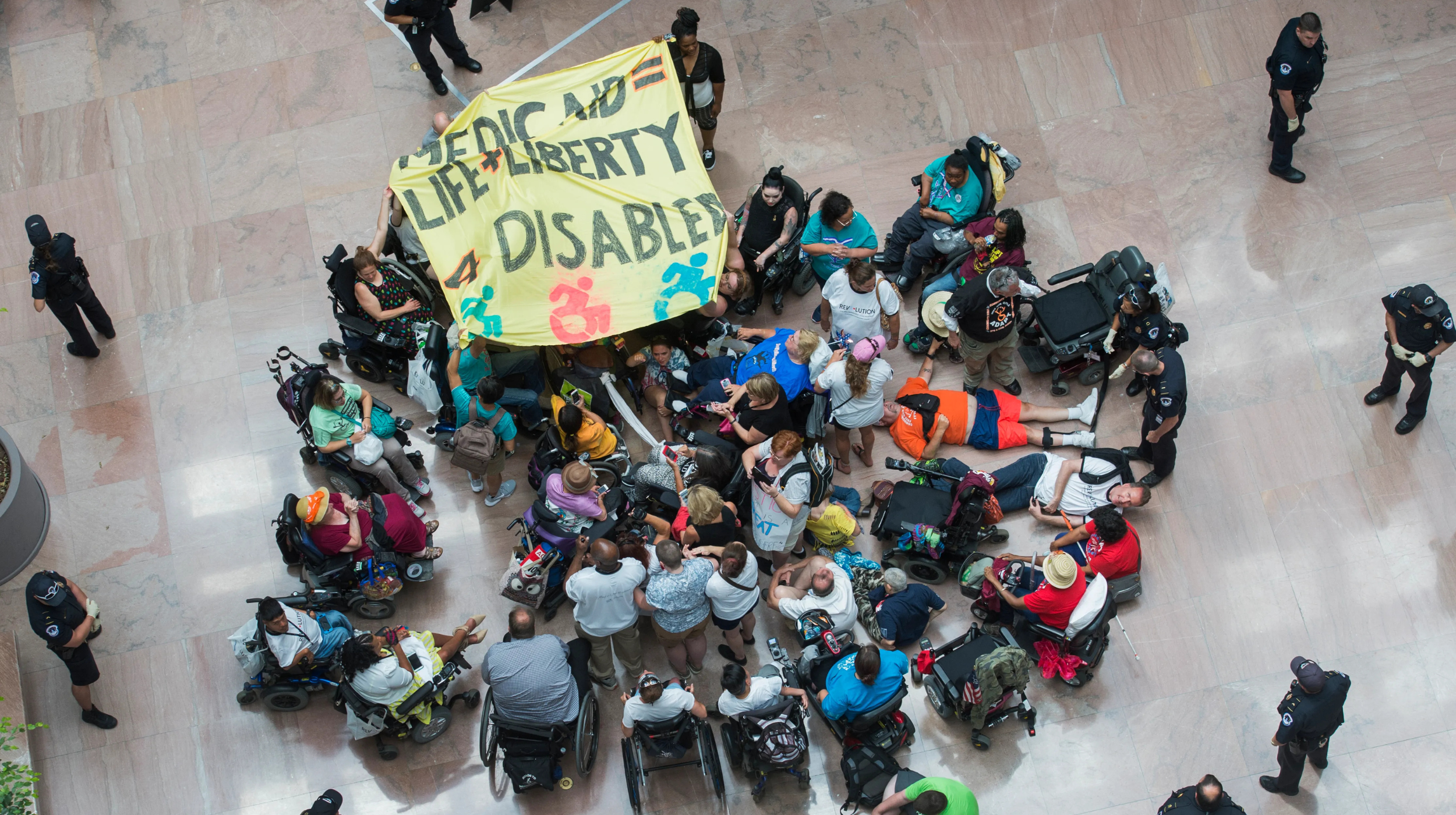
The order further directs leaders of federal agencies to halt the enforcement of policies, regulations, and agreements that rely on disparate-impact theories of liability. This directive will have far-reaching consequences for disability civil rights enforcement, particularly under foundational statutes such as the Rehabilitation Act, the Americans with Disabilities Act, and the Individuals with Disabilities Education Act, which itself was enacted as an amendment to the Education for All Handicapped Children Act of 1975.
These laws have always depended on an understanding of discrimination that extends beyond intent and into impact. To strip away that framework is to severely limit their reach, rendering them reactive rather than preventative, and symbolic rather than protective.
This shift represents more than a legal reinterpretation; it is a retreat from the federal government’s responsibility to address structural inequality. Disabled people, especially those who are also Black, poor, rural, or otherwise marginalized, are most likely to experience discrimination through policy design, administrative practice, and institutional neglect rather than explicit exclusion.
By abandoning disparate-impact enforcement, the federal government signals a willingness to tolerate these outcomes so long as they are produced quietly and without overt animus. The result is a civil rights regime that acknowledges harm only after it becomes catastrophic, and one that leaves disabled people with fewer tools to challenge exclusion before it becomes irreversible.
Gutting Civil Rights Enforcement in Education
Through mass layoffs and severe budget cuts at the Department of Education, the Trump administration has deliberately hollowed out the federal government’s infrastructure for protecting the civil rights of students with disabilities. The Office for Civil Rights (OCR) is charged with enforcing federal laws that prohibit discrimination in education based on disability, race, sex, gender, and national origin.

In March 2025, the capacity of OCR to provide oversight and protection for disabled and other marginalized students was dramatically reduced when the Department of Education initiated a reduction-in-force that eliminated nearly half of OCR’s staff5. These reductions in force significantly limited OCR’s ability to investigate complaints of discrimination, enforce the Individuals with Disabilities Education Act (IDEA), and uphold students’ rights to a free appropriate public education. As a result, OCR has struggled to meet statutory investigation timelines and provide meaningful federal oversight.
While these actions were framed by the administration as efforts to “empower parents, states, and communities,” in practice, they shifted responsibility away from federal enforcement while dismantling the mechanisms families rely on to challenge discrimination in schools6. Without sufficient investigators, enforcement authority, or institutional capacity, OCR has been reduced to a largely symbolic entity. As a result, disabled students and their families are left without meaningful recourse when their civil rights are violated.
In the Trump administration’s proposed FY 2026 budget, they called for a $49 million reduction to the Department of Education’s Office for Civil Rights (OCR), representing a 35 percent cut from its previously approved $91 million budget. In the budget proposal, the administration explicitly justified this budget decrease as a means of shifting OCR’s focus away from Diversity, Equity, and Inclusion (DEI) initiatives and cases related to transgender students under Title IX.
According to the budget request, the reduction was intended to prevent OCR from promoting DEI programs or what the administration characterized as “radical transgender ideology”7. Framed as an effort to refocus civil rights enforcement, the proposed budget cut instead functioned to further restrict OCR’s already diminished ability to investigate discrimination complaints, enforce the Individuals with Disabilities Education Act (IDEA), and uphold students’ rights to a free appropriate public education.
Social Security Administration Cuts and Benefit Delays
The Trump administration’s ongoing reduction of infrastructure vital to the well-being of people with disabilities included significant cuts to the Social Security Administration (SSA) workforce. These staffing reductions have led to delays in processing and delivering disability benefits. As a result, the SSA now lacks the capacity to adequately meet the needs of those relying on these benefits to survive the material conditions of poverty, chronic illness, and housing insecurity. In August 2025, 8.1 million people received Social Security Disability Insurance (SSDI) benefits, and 7.3 million people received federal Supplemental Security Income (SSI)8.
Despite the millions of people at risk of losing access to essential financial services, the Trump administration’s cuts have inevitably resulted in fewer staff available to process applications, conduct reviews, and address errors. Routine administrative functions have been deliberately and strategically slowed, resulting in growing backlogs, increased denials, and prolonged interruptions in disability benefits.
On November 21, 2025, the Social Security Administration issued an official press release excerpting an end-of-year letter from SSA Commissioner Frank J. Bisignano to Congress. In that letter, Bisignano stated, “I am grateful for the opportunity President Trump has given me to lead the hardworking men and women of SSA”9.
While publicly affirming loyalty to the President, SSA leadership offered no acknowledgment of the designed and implemented material harm caused by staffing reductions or of the life-threatening consequences that benefit interruptions pose for disabled people who rely on Social Security for survival. For disabled people, these delays are not neutral bureaucratic failures. Interruptions in Social Security Disability Insurance (SSDI) and Supplemental Security Income (SSI) mean lost income for rent, food, utilities, and medication, forcing people to choose between basic necessities or go without them entirely.
In addition to publicly thanking President Trump at a moment when his administration is actively dismantling systems of care and access to survival funds, SSA Commissioner Frank J. Bisignano has downplayed the material harm caused by workforce reductions by promoting a “digital-first” and technology-driven approach to customer service. He told reporters that the SSA would “continue our digital-first approach to further enhance customer service by introducing new service features and functionality across each of our service channels to better meet the needs of the more than 330 million Americans with Social Security numbers”10.
Positioning digital transformation as a solution obscures the real and material consequences of staffing cuts. Technology cannot replace the human judgment, outreach, and individualized casework required to adjudicate complex disability claims, provide accurate determinations, or offer support to those without reliable internet access or digital literacy.
Weakening ADA and Fair Housing Act Enforcement
The rollback of guidance under the Americans with Disabilities Act (ADA) and the decreased enforcement of the Fair Housing Act have diminished essential tools for addressing discrimination in housing and public accommodations. Through executive actions, regulatory modifications, and budget reductions, the previous administration’s policies have decreased the federal government’s ability to investigate complaints, enforce civil rights laws, and ensure accountability for landlords, businesses, and other entities that deny access or reasonable accommodations.
These changes are supported by the administration’s FY 2026 budget proposals, which propose reductions in funding for fair housing enforcement and civil rights initiatives within the Department of Housing and Urban Development (HUD). These cuts may hinder the agency’s ability to meet its statutory responsibilities11.
As enforcement capacity diminishes, entities engaging in discriminatory practices may face fewer consequences, while individuals experiencing discrimination may experience longer delays and limited investigative resources.
Given that disability is the most common basis for fair housing complaints nationwide, reduced enforcement efforts disproportionately impact disabled individuals, increasing their risk of eviction, denial of reasonable accommodations, inaccessible housing, and forced displacement12.
Additionally, the administration’s decision to suspend enforcement of HUD rules protecting transgender and nonbinary individuals has further narrowed civil rights protections, increasing vulnerabilities for disabled persons who may also face gender-based discrimination13.
As enforcement capabilities diminish, entities engaged in discriminatory practices face fewer repercussions, while people harmed by discrimination experience longer delays and limited investigative resources. At the same time, the administration has cut programs that historically supported disabled people experiencing homelessness, removing critical stabilizing resources alongside weakened enforcement protections14.
These combined actions increase housing instability, deepen segregation, and raise the risk of institutionalization by undermining both accountability and support systems.
Reducing Oversight in Nursing Homes
Delaying the implementation of federal minimum staffing standards and weakening oversight in nursing homes increases the risk of neglect, abuse, and preventable harm for residents who are disabled or have chronic illnesses. In December 2025, the Department of Health and Human Services (HHS) announced plans to roll back and delay enforcement of the federal nursing home minimum staffing standards, citing an effort to improve access to care in rural and Tribal communities15.
However, postponing these standards undermines accountability in a sector already burdened by chronic understaffing and ongoing quality concerns. The staffing requirements were finalized by the Centers for Medicare & Medicaid Services (CMS) in September 2024, following decades of evidence indicating that inadequate staffing levels are directly associated with increased incidents of neglect, medical errors, infections, and preventable hospitalizations in long-term care facilities16.
Delaying or relaxing enforcement of these standards undermines established advocacy efforts to establish fundamental protections for institutionalized people with disabilities, many of whom rely on sufficient staffing to ensure their health, safety, and dignity.

Source: NPR
These risks are further amplified by the current structure of nursing home financing. The majority of nursing facility residents depend on Medicaid, and many facilities face financial pressures that can incentivize cost-cutting measures at the expense of care quality17.
Rather than tackling these systemic funding challenges, delaying the implementation of staffing standards shifts the burden onto residents by accepting unsafe care conditions and reducing federal oversight at a time when enhanced protections are critically needed.
Broadening the gap in accessible communications from government agencies
The Trump administration implemented several policies that limited access to government information, often overlooking the needs of people with disabilities who depend on clear, timely, multilingual, and accessible communication. These measures have increased barriers for people with cognitive, sensory, linguistic, and technological access needs, contributing to the marginalization of diverse communities in public communication.
In January 2025, the Trump administration discontinued live American Sign Language (ASL) interpretation at White House press briefings, eliminating a key accessibility practice that had enabled Deaf and hard-of-hearing people to access federal communications18.
In response, the National Association of the Deaf filed a federal lawsuit in May 2025, arguing that the removal of ASL interpretation constituted disability discrimination and violated federal accessibility protections19. Although a federal judge ordered the administration to reinstate ASL interpreters, the Trump administration challenged the order, asserting that providing interpreters would intrude upon the president’s control over his public image20.
These actions by the Trump administration served as a means to widen communication gaps and weaken infrastructure essential for disabled communities’ access to government information.
On March 1, 2025, the administration issued Executive Order 14224, designating English as the official language of the United States, signaling a federal withdrawal from multilingual communication practices long used to ensure access for people with limited English proficiency21.
While framed as an efficiency measure, this shift undermines access for disabled immigrants, Deaf and hard-of-hearing people who rely on translated written materials, and people who use plain-language or alternative formats to understand complex government guidance.
Multiple federal agencies were directed to restrict the language they use in public-facing materials. Agencies were discouraged by Executive Order 1415 from using words related to diversity, equity, accessibility, disability, and systemic harm across government websites and documents22.
This language suppression has made it harder for disabled people to locate relevant resources, understand their rights, or identify programs intended to support them, particularly when the term “accessibility” itself becomes linguistically erased by federal authorities23.
Communication disruptions were compounded early in the year when political appointees directed federal health agencies, including HHS, CDC, and FDA, to pause all external communications while content was reviewed, halting the flow of public health guidance at a time when reliable information was essential for many disabled people managing chronic health risks24.
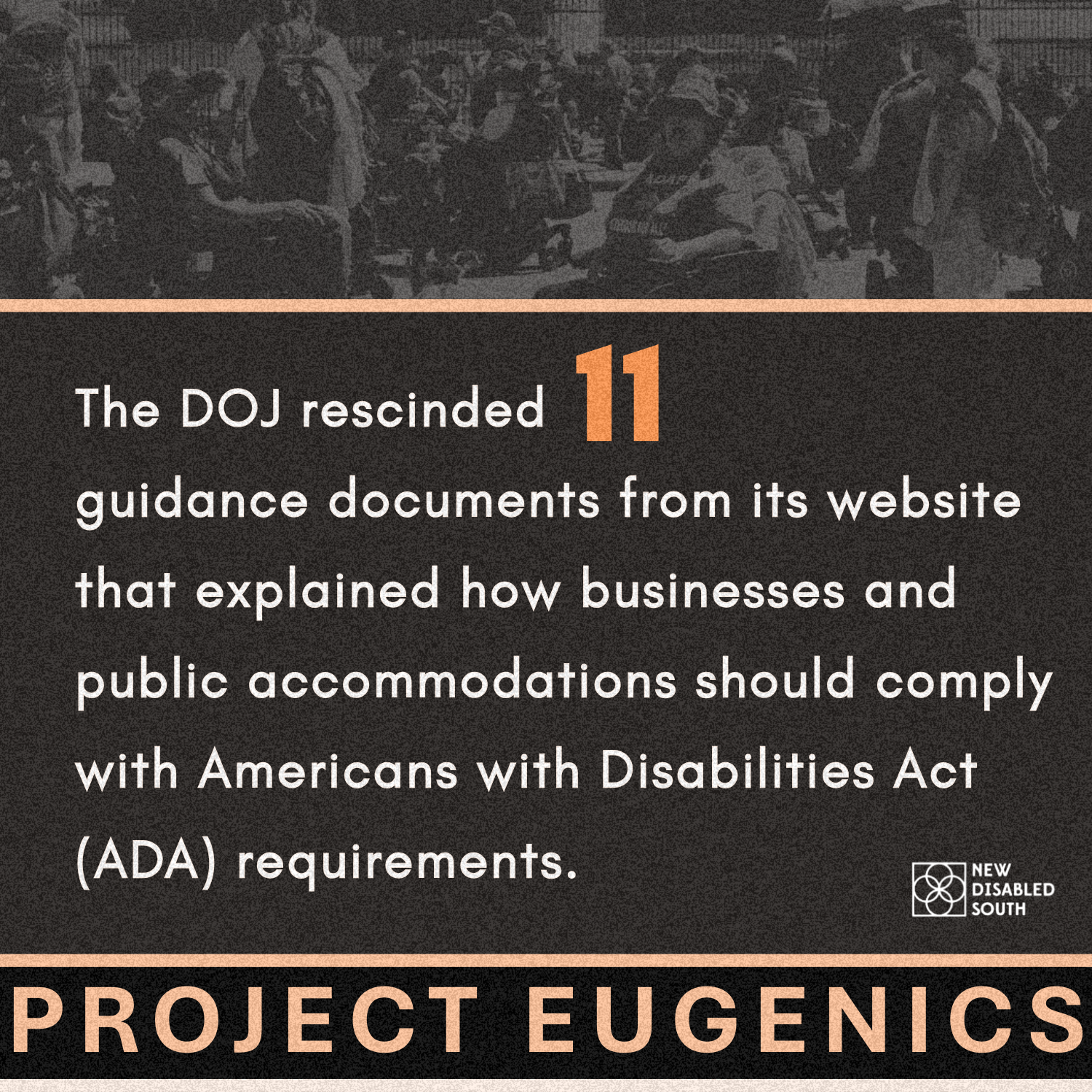
The erosion of accessible communication has extended into civil rights guidance as well. In March 2025, the U.S. Department of Justice removed 11 ADA guidance documents for businesses from the ADA.gov website, materials that provided practical explanations of how to comply with accessibility obligations in areas such as retail, lodging, service animals, and accommodations25.
While the ADA itself remains law, the removal of these guidance documents eliminates widely used explanations of accessibility requirements, creating confusion and reducing clarity about compliance obligations for both people with disabilities and businesses obligated to meet accessibility standards26.
By limiting language access, the administration has widened existing communication access gaps. Rather than strengthening inclusive communication infrastructure, these policies reinforce a model of governance that privileges control, ideology, and linguistic uniformity over accessibility and equitable access to essential information.
Punishment: policies that actively harm and abuse disabled people through coercion, criminalization, institutionalization, or the denial of basic care and survival needs.
Expanded ICE Detention & Loss of Oversight
By expanding ICE detention while dismantling meaningful oversight, the Trump administration has intensified cycles of abuse, medical neglect, and systemic disregard for disabled immigrants. Many people are confined in facilities that lack even basic medical infrastructure or disability accommodations.
This expansion has concentrated harm in the U.S. South, where fourteen of the twenty largest immigration detention centers are located in Mississippi, Louisiana, and Texas27, regions that also have some of the highest disability rates in the country28.
At the same time, the scale of detention has increased dramatically. According to the Migration Policy Institute, following Trump’s return to the presidency in January 2025, the number of people held in ICE custody rose from approximately 39,000 at the beginning of the year to around 61,000 by late August.
Projections suggest the detained population could exceed 100,000 by early 2026, reaching levels far beyond those under any prior administration29. The rapid expansion of detention and the erosion of oversight have created conditions that disproportionately endanger disabled immigrants, leaving them vulnerable to neglect, abuse, and systemic harm.
Furthermore, the Trump administration proposes a significant expansion of Immigration and Customs Enforcement (ICE) through substantial budget and staffing increases. The FY 2026 budget allocates $11.3 billion to ICE and authorizes 21,808 positions, including 21,786 full-time equivalent (FTE) staff, explicitly framing this funding as necessary to “fully implement the President’s mass removal campaign”.
The budget prioritizes Enforcement and Removal Operations to advance the administration’s stated goal of removing 1,000,000 people per year while maintaining 100,000 detention beds nationwide.
To meet these targets, the budget includes $501 million to expand detention capacity, sustaining 50,000 detention beds, as well as an additional $205 million for Transportation and Removal Operations, covering domestic detainee transfers and international deportations of people with final orders of removal30.
These expansions place disabled immigrants at heightened risk. Many already experience high rates of poverty, limited English proficiency, lack of health insurance, and exclusion from government support programs31, conditions that are further exacerbated by detention, inadequate medical care, and the pervasive fear of immigration enforcement, which discourages individuals from seeking healthcare and other essential support.
This expansion has been paired with the systematic dismantling of oversight. In Executive Order 14210, issued on February 11, 2025, the Trump administration directed federal agencies to prepare for large-scale workforce reductions. In response, the Department of Homeland Security (DHS) eliminated staff in critical oversight offices, including the Office for Civil Rights and Civil Liberties (CRCL), the CIS Ombudsman, and the Immigration Detention Ombudsman32.
These offices are essential for investigating abuse, processing disability accommodation requests, and conducting unannounced inspections of detention facilities. Without them, detained disabled people are left with minimal to no options against neglect, abuse, and life-threatening conditions.
The consequences of these staffing cuts are immediate and severe for disabled immigrants. For example, Rodney Taylor, a Black, disabled double amputee detained at Georgia’s Stewart Detention Center, experienced prolonged detention, medical neglect, and the denial of required disability accommodations amid the erosion of federal oversight33.
Detention centers increasingly operate with near impunity, leaving disabled people confined without adequate medical care, accessibility, or the basic protections necessary for survival.
Forced Institutionalization, Criminalizing Homelessness
By framing institutionalization as a matter of “public safety,” the Trump administration advances the forced confinement of unhoused and disabled people as a punitive response rather than a form of care. On July 24, 2025, Donald J. Trump signed the executive order Ending Crime and Disorder on America’s Streets, which promotes involuntary civil commitment, expanded policing, and institutional confinement of people with mental health disabilities and substance-use disorders34.
The order pressures states and local governments to abandon decades-long “housing first” approaches in favor of criminalization, policing, and forced institutionalization, displacing community-based models of care that prioritize stability, autonomy, and support.
This executive order poses a direct threat to the civil rights protections established under Olmstead v. L.C. (1999). Under the Americans with Disabilities Act, the Olmstead decision requires states to provide services in the most integrated setting appropriate when community-based supports are desired by the individual, clinically appropriate, and can be reasonably accommodated35.
By promoting involuntary confinement and institutional responses over voluntary, community-based services, the 2025 executive order undermines this legal mandate, replacing the right to community living with segregation, coercion, and institutional punishment.
This executive order also contradicts decades of public health and policy evidence about what actually supports disabled people and unhoused communities. Health policy experts warn that the shift risks reversing hard-won deinstitutionalization efforts; an analysis by KFF finds that the order represents a dramatic move away from evidence-based “housing first” and community-centered care toward expanded involuntary commitment, institutionalization, and policing approaches that are more likely to worsen outcomes for people with serious mental illness rather than improve stability or health36.
Similarly, the ACLU condemns the order for stripping disabled people of autonomy and dignity, replacing voluntary, community-based supports with coercive institutional settings that have long histories of abuse, neglect, and isolation37. The order also contradicts decades of public health and policy evidence about what effectively supports disabled people and unhoused communities.
Policies that punish disabled people in the name of “public safety” have deep roots in U.S. history. The Trump administration’s executive order Ending Crime and Disorder on America’s Streets reflects this legacy by reviving a framework that treats disability as a threat to public order rather than a condition requiring care and support.
Trump’s executive order mirrors the “Ugly Laws” of the late 19th and early 20th centuries, which explicitly criminalized the public presence of disabled people, particularly those deemed “unsightly,” “deformed,” or disruptive to social order. Under these laws, disabled people could be fined, arrested, or forcibly institutionalized simply for existing in public spaces, effectively sanctioning their removal from community life38.
Although Ugly Laws were formally repealed by the mid-20th century, their underlying logic persists in contemporary policies that prioritize confinement and control over dignity, agency, and autonomy, revealing a continuous lineage of disability punishment embedded in U.S. governance.
Medicaid Cuts, Medicaid Work Requirements
Efforts to impose Medicaid work requirements alongside deep cuts to the program represent a punitive strategy that undermines disabled people’s autonomy, health, and ability to remain in their communities.
On July 4, 2025, Trump signed the One Big Beautiful Bill Act into law, mandating Medicaid work requirements that make coverage contingent on meeting “community engagement” standards, including 80 hours of labor per month effective, January 1, 2027, for people ages 19 to 6439.
These requirements operate in tandem with substantial Medicaid cuts, which significantly reduce federal spending on the program, primarily by forcing people to lose access to coverage. Together, Medicaid cuts and work requirements pose a direct threat to Home and Community-Based Services (HCBS). As federal Medicaid funding shrinks, the financial burden is shifted onto states, which are forced to slash already underfunded programs.
The One Big Beautiful Bill Act cuts more than $1 trillion from Medicaid40. These cuts predictably lead to longer HCBS waitlists, reduced availability and quality of care, and increased institutionalization of disabled people, undermining the very purpose of HCBS and stripping disabled people of the right to live independently in their communities.
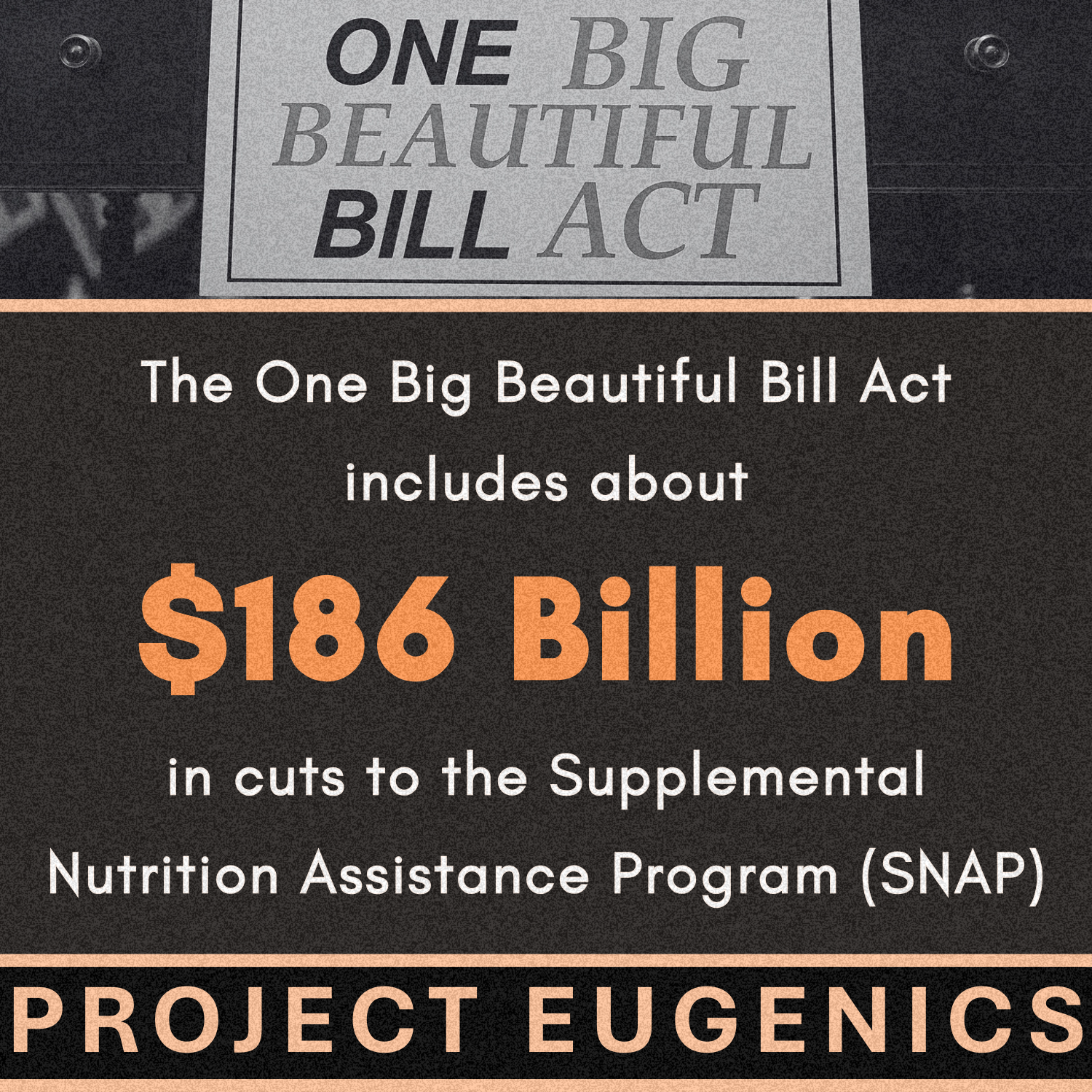
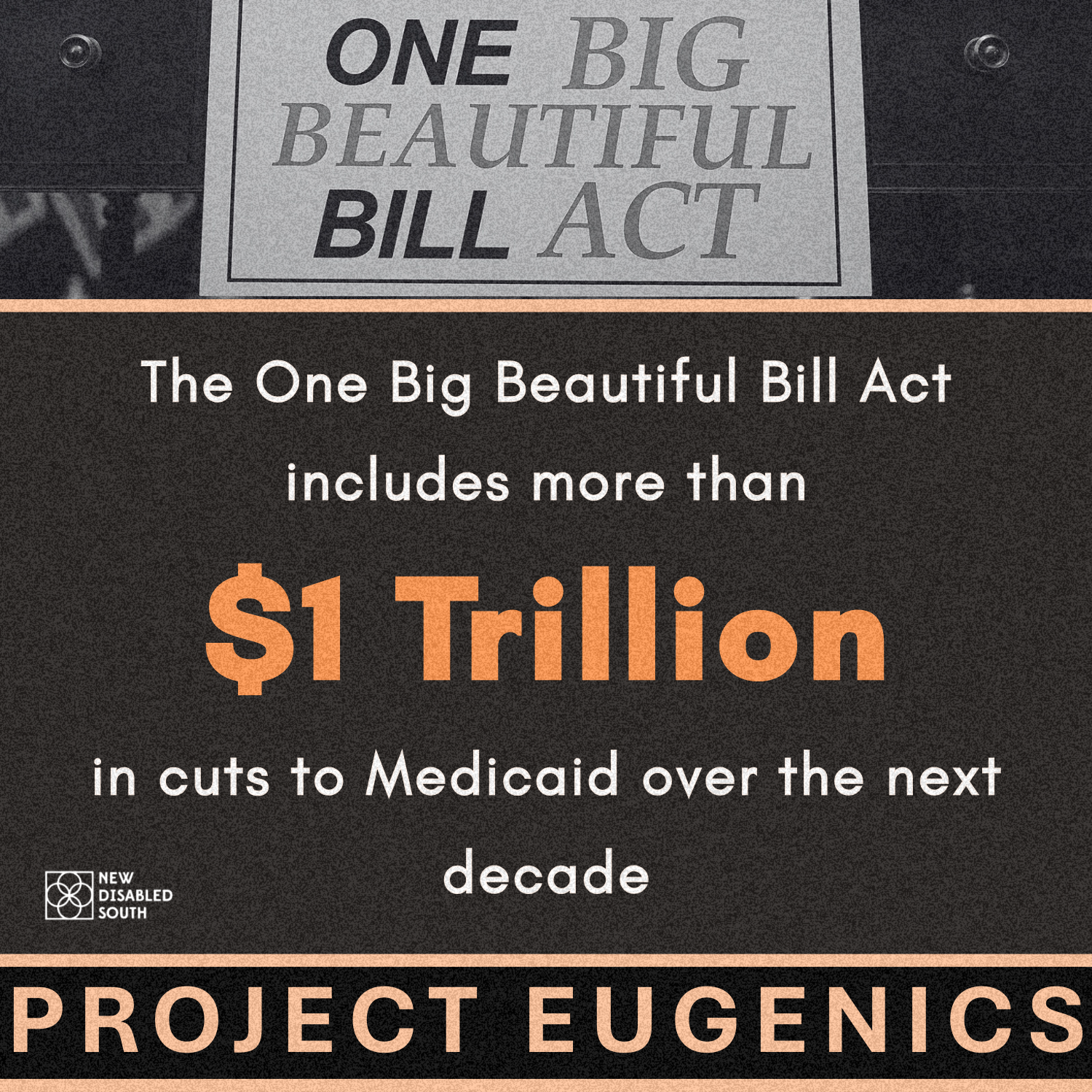
The One Big Beautiful Bill Act cuts more than $1 trillion from Medicaid and approximately $186–200 billion from SNAP over the next decade, forcing deep reductions in health care and nutrition supports that disproportionately harm disabled people and other marginalized communities41.
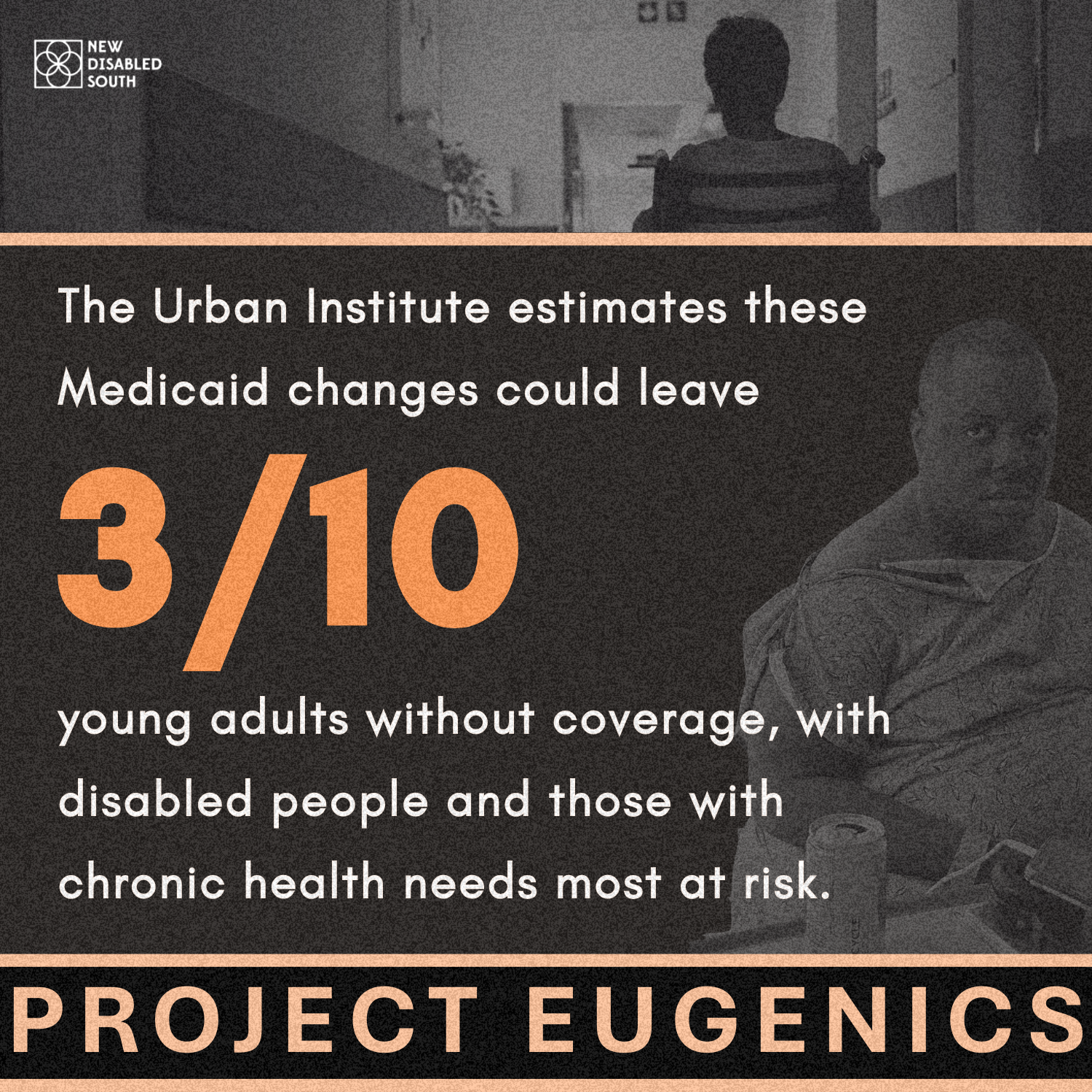
The Urban Institute estimates that these Medicaid changes alone could leave 3 in 10 young adults vulnerable to losing coverage, with disabled people and those with chronic health needs among those most likely to be harmed by coverage loss and bureaucratic churn42.
Together, Medicaid cuts and work requirements function not as support systems, but as tools of punishment, restricting access to care and penalizing disabled people for failing to meet rigid and often impossible standards.
SNAP Cuts and Cuts to Healthcare
The punitive logic driving deep Medicaid cuts also extends to food assistance programs, further destabilizing disabled people’s ability to survive. In 2024, nationally, 37 percent of SNAP participants lived in households that included an older adult or a disabled family member, according to data from the USDA Food and Nutrition Service, underscoring the disproportionate impact that cuts to food assistance have on disabled communities43.
The One Big Beautiful Bill Act not only slashes nearly $1 trillion in Medicaid funding but also cuts approximately $187 billion from the Supplemental Nutrition Assistance Program (SNAP) through 2034, significantly restricting access to nutrition support and escalating food insecurity among already vulnerable populations44.
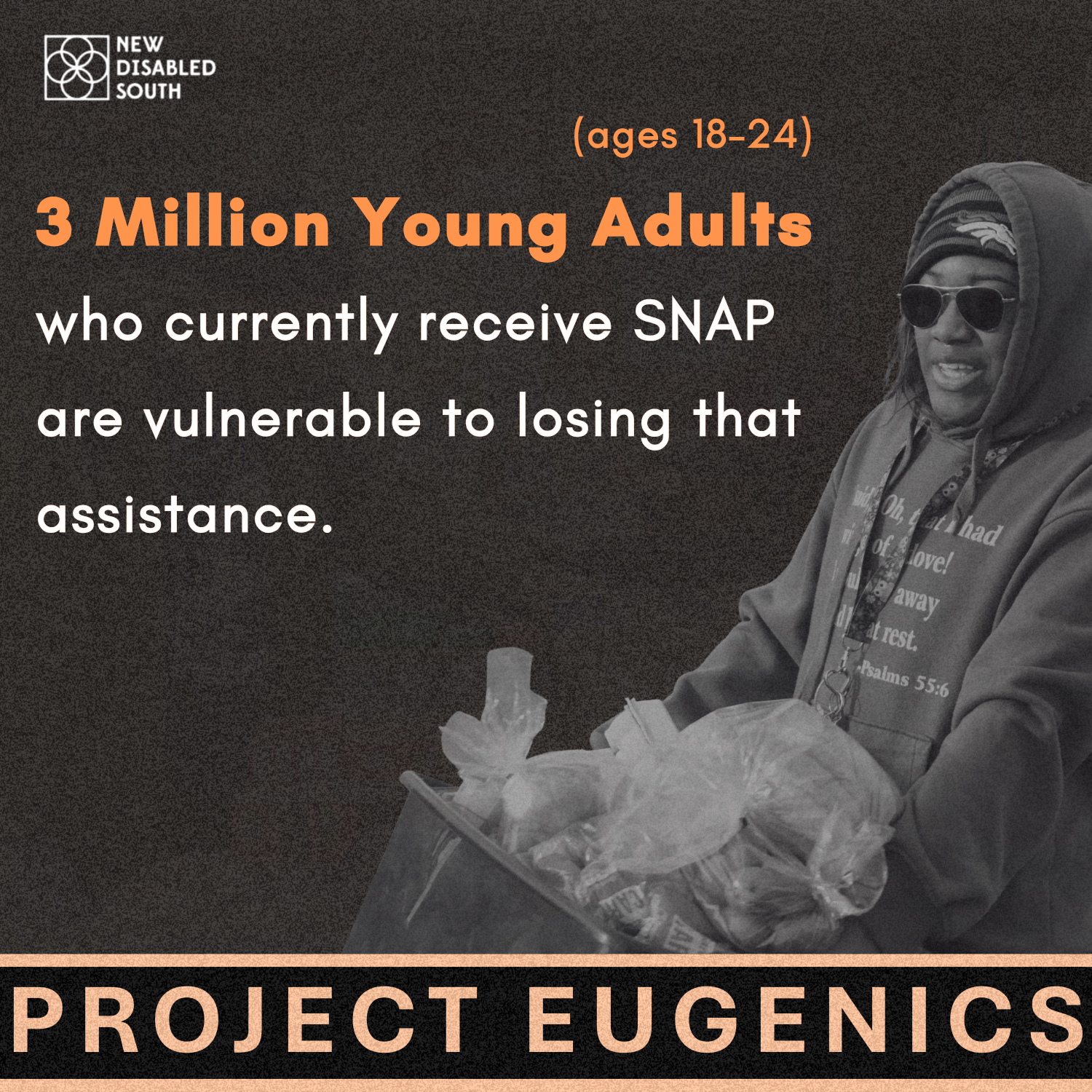
According to the Urban Institute, these changes could leave nearly 3 million young adults at risk of losing SNAP benefits, with disabled people and those managing chronic health conditions among those most affected45.
Reporting from STAT News illustrates the real-world consequences of these cuts: when SNAP benefits are terminated, people experience immediate hunger, deteriorating health, and, in some cases, life-threatening outcomes, particularly for those who rely on consistent nutrition to manage chronic conditions. These harms are further exacerbated during government shutdowns and administrative disruptions46.
Cuts to healthcare and food assistance do not function as reform or safety-net protection; instead, they operate as mechanisms of punishment, raising eligibility thresholds, increasing bureaucratic barriers, and causing widespread benefit loss that disproportionately harms disabled people and other vulnerable communities.
Limiting Mental Health Access
Mental health care has been withheld from millions of Americans through policy choices that allow insurers to deny, delay, and limit treatment. On May 12, 2025, just months into its second term, the Trump administration paused rules finalized in September 2024 that would have required insurers to disclose how they restrict or deny mental-health claims47.
At the same time, the administration has reportedly cut funding and staffing at the Employee Benefits Security Administration (EBSA), the federal agency responsible for enforcing mental-health parity. These actions systematically weaken the protections guaranteed under the Mental Health Parity and Addiction Equity Act (MHPAEA), encouraging insurers to treat mental-health and substance-use disorder care as optional rather than essential.
Without transparency or enforcement, insurers are more likely to deny claims, impose restrictive utilization controls, or delay care. The result is a predictable loss of access to care, particularly for people with chronic mental illness and disabled people who depend on consistent treatment to survive.
The 2024 Final Parity Rule, designed to strengthen insurers’ obligations to cover mental-health and substance-use treatment on equal footing with physical health care, now sits in regulatory limbo48. This suspension is not a bureaucratic accident but a policy choice: by dismantling enforcement, the administration effectively restores insurers’ ability to ration mental-health care.
Blocking medical programs for Palestinians
During the ongoing genocide in Gaza, the systematic denial of medical care has functioned as a form of collective punishment, particularly against disabled, injured, and chronically ill Palestinians.
On August 16, 2025, the United States suspended its visa process for bringing sick and injured Palestinians out of Gaza for medical treatment. Medical nonprofit organizations such as HEAL Palestine and the Palestine Children’s Relief Fund have historically relied on temporary visitor visas (including B1/B2 visas) to evacuate children and other patients for life-saving surgeries and urgent care abroad, often accompanied by family members49.
According to PRISM Reports (2025), this suspension has effectively shut down one of the last remaining medical-evacuation pathways at a moment when Gaza’s health system has been deliberately destroyed50.
This is not a bureaucratic failure; it is punishment. By blocking access to treatment, the policy weaponizes disability and illness, turning survivable injuries into death sentences. Genocide is not only mass killing; it is mass disabling.
Bombardment, starvation, and medical deprivation produce multiple generations of amputations, chronic illness, trauma, and untreated injuries, while simultaneously cutting off access to the resources needed for survival and care. The Trump administration’s second term reflects a broader political logic that treats disabled lives as expendable, both abroad and at home.
The same framework that justifies denying Palestinian children visas for surgery mirrors domestic policies that punish disabled people through benefit cuts, forced institutionalization, surveillance, and the erosion of healthcare access.
The genocide in Gaza is not disconnected from domestic disability oppression in the United States; it is an extension of the same system that decides which lives are worth care, protection, and survival, and which can be sacrificed.
Sending Weapons, Causing Mass Disability
Historically, U.S. foreign policy has actively contributed to mass death and mass disablement through the export of weapons, military aid, and foreign policy in ongoing genocides. On February 28, 2025, the Trump administration approved a nearly $3 billion arms sale to Israel, supplying additional weapons used in the genocide in Gaza51.
These actions not only facilitate violence; they intentionally produce long-term injury, impairment, and medical abandonment as conditions of life under genocide. In Gaza, the scale of war-related disability is catastrophic.
By September 2024, nearly 22,000 Palestinians had lost limbs or sustained permanent, life-altering injuries, according to the World Health Organization52. By September 2025, that number had nearly doubled, with more than 41,800 people requiring long-term rehabilitation due to sustained military assault53.
These figures reflect not only physical trauma but the deliberate creation of a population forced to survive without access to healing.
Restrictions on medical supplies and mobility aids, including prosthetics, wheelchairs, crutches, and rehabilitation equipment, have made treatment nearly impossible for thousands of wounded people54.
U.S. policies that fund and distribute weapons, while enabling the blockade of medical and humanitarian aid, disproportionately harm children, women, and older adults, turning survivable injuries into lifelong disabilities and preventable deaths. This is punishment enacted through policy: violence followed by the systematic denial of care.
Genocide is carried out not only through mass killing, but through the deliberate production of widespread disability and the subsequent dismantling of medical infrastructure and humanitarian access. Disabled people, particularly those injured in war, are treated as disposable, unworthy of care, and easily erased from political concern on a global and domestic scale.
Dehumanization: discourses, misinformation, and narratives that frame disability as a threat, burden, or defect, allowing for (or sanctioning) violence and neglect
State-Sanctioned Autism Misinformation
State-sanctioned misinformation has fueled harmful misconceptions about autism by falsely attributing it to parental behavior or environmental exposures, reinforcing stigma and shame while framing autism as a threat to be eradicated rather than a form of human diversity.On April 10, 2025, during a cabinet meeting, Health and Human Services Secretary Robert F. Kennedy Jr. claimed, “By September, we will know what has caused the autism epidemic, and we will be able to eliminate those exposures”55.
Months later, on September 22, 2025, at a White House event, President Trump similarly promoted discredited narratives by linking acetaminophen use during pregnancy to autism and repeating misleading claims about vaccines56.
These statements reflect a pattern of government-endorsed misinformation that not only misrepresents scientific evidence but also dehumanizes autistic people, framing their existence as a preventable crisis rather than a valid and inherently valuable form of neurodiversity. The spread of misinformation about autism undermines science, trust in public health, and amplifies harmful social and policy consequences for people with autism and their families.
On the same day, the White House published an article titled “FACT: Evidence Suggests Link Between Acetaminophen and Autism,” which presented unverified information and suggested that acetaminophen may increase the risk of autism, framing this claim as an established fact57.
The misinformation, officially disseminated by the Trump administration, is both harmful and dehumanizing, portraying autism as an “epidemic”, a tragic and preventable condition. Through this rhetoric and the authority of their office, the administration promotes the notion that autistic people are flawed and should be erased from society.
The administration’s misinformation extended into official public health communications. On November 19, 2025, the Centers for Disease Control and Prevention, a division of HHS, updated its official “Vaccine Safety” webpage to state that “the claim ‘vaccines do not cause autism’ is not an evidence-based claim because studies have not ruled out the possibility that infant vaccines cause autism,”58.
This is language that echoes debunked vaccine-autism links long promoted by Health and Human Services Secretary Robert F. Kennedy Jr.59. This revision goes against the longstanding scientific consensus, based on decades of high-quality research showing no causal link between vaccines and autism.
The Resurgence of Eugenic Logic
Eugenics is a foundational logic of governance in the United States that has shaped who the state deems worthy of protection and who is surveilled, controlled, and killed. Through scientific racism and ableism, eugenic logic has been used to frame the existence of those viewed as non-normal as a societal problem that requires elimination.In the early twentieth century, the Eugenics Records Office (ERO) was an essential institution that collected and used pseudoscientific data to legitimize claims that disability, poverty, and criminality were hereditary traits. Data collected from the ERO was then used to justify sterilization laws, segregation policies, and immigration policies60.
The Immigration Act of 1924, one of the most explicitly racist immigration laws in U.S. history, was directly shaped by eugenic data produced by the ERO, embedding racialized and ableist exclusion into federal law. At the state level, these ideas translated into direct violence.
On March 22, 1909, Washington became the second state in the nation to pass a law authorizing the forced sterilization of people deemed “unfit,” a category that overwhelmingly included disabled people, people labeled as mentally ill, incarcerated people, and poor people61.
Over the following decades, tens of thousands of disabled people were forcibly sterilized across the United States, often without consent or knowledge, under laws explicitly designed to prevent them from reproducing. These policies were upheld by courts, enforced by medical institutions, and normalized through public discourse that framed disabled lives as social burdens rather than human beings with rights.
This history profoundly shapes our present, as the rhetoric and policy agenda of the Trump administration reveal a troubling alignment with eugenic ideology. Though dressed in modern political language, these ideas are rooted in the same dangerous beliefs: that certain lives are inherently inferior, defective, costly, and threatening. It is a disturbing reminder that, across time, the idea has persisted that the state holds the power to manage, contain, or even eliminate those it deems abnormal.
Within this context, Health and Human Services Secretary Robert F. Kennedy Jr., who oversees Medicare, Medicaid, and major public health agencies, has repeatedly advanced dehumanizing narratives about disability, particularly autism. Kennedy has promoted misinformation linking Tylenol use and vaccines to autism and has framed autism not as a form of human variation, but as a catastrophic failure to be prevented or eliminated.
On April 16, 2025, during a press conference at the Department of Health and Human Services, Kennedy stated that “autism destroys families” while discussing a CDC report on autism prevalence. He further characterized autism as an “individual tragedy” that destroys “our greatest resource, which are our children,” and has claimed that autistic people will never pay taxes, get jobs, or enter relationships, explicitly framing them as permanent burdens on society62.
This language is not only stigmatizing; it is eugenic. It assigns value to human life based on productivity, economic contribution, and conformity to social norms. It positions disabled people as political burdens, and it constructs their existence as a problem requiring intervention rather than support.
Following these remarks, the National Institutes of Health and the Centers for Medicare and Medicaid Services announced a research initiative commissioned by Kennedy to investigate the “root causes” of autism. On May 7, 2025, Kennedy further announced that this initiative would include the creation of a database of autistic patients enrolled in Medicaid and Medicare63.
Given the historical record, this proposal raises profound concerns. State-maintained registries of disabled people have weaponized research and data collection as tools of surveillance, control, and violence, facilitating forced institutionalization, sterilization, and social exclusion. The creation of such a database echoes earlier eugenic practices of the ERO, which treated disabled, poor, and racialized populations as subjects to be monitored, categorized, and managed rather than protected.
This logic is not confined to health policy. It reflects a broader ideological framework promoted by Donald Trump himself.
During his 2024 presidential campaign, Trump stated on a conservative radio show discussing immigration and violent crime, “You know, now a murderer, I believe this: It’s in their genes. And we have a lot of bad genes in our country right now”64.
By attributing social harm to genetic inferiority, Trump invoked a core premise of eugenics: that certain populations are biologically defective and pose an inherent threat to society. Historically, such claims have been used to justify exclusion, incarceration, forced sterilization, and mass death. These policies and narratives demonstrate that eugenics is being operationalized through surveillance, misinformation, and the dismantling of care.
The same logic that once justified forced sterilization and immigration exclusion informs today’s benefit cuts, institutionalization, criminalization, and the withdrawal of life-sustaining supports.
Discouraging COVID-19 Protections
Disabled people have been rendered disposable through narratives that frame COVID-19 protections as unnecessary or excessive. Under the Trump administration, this rhetoric has been reinforced through a series of executive actions that actively discouraged public health safeguards.
On January 20, Trump’s first day in office, he issued an executive order titled “Initial Rescission of Harmful Executive Orders and Actions.” This order eliminated several COVID-19 protections, including mask mandates and testing requirements for federal workers, and rescinded a prior executive order that had ensured a data-driven federal response to the pandemic65.
On February 14, 2025, the President further restricted COVID-19 protections by prohibiting federal funding for COVID-19 vaccine mandates in schools, framing the policy as an effort to end “government overreach” and protect “personal freedoms.” This policy bars federal funds from supporting any educational institution, including state education departments, local school districts, elementary and high schools, colleges, and universities, that requires students to be vaccinated against COVID-19 in order to attend in-person classes66.
By removing COVID-19 protections, the administration downplays the ongoing severity of the virus while simultaneously dismantling public health infrastructure that is vital to protecting high-risk populations. Disabled people, elderly people, chronically ill people, and children are treated as expendable populations whose health is deprioritized during an ongoing pandemic that disproportionately impacts them.
Erasing Data on Equity, Health, and Climate
The systematic disappearance of disability and equity data reinforces discourses that treat disabled people as expendable, legitimizing neglect and stigma by obscuring the scale and consequences of political violence. The Trump administration systematically undermined the federal data infrastructure used to track inequality, health outcomes, disability, and environmental risk, making structural harm harder to measure and easier to deny.
Federal agencies removed or suppressed datasets related to race, disability, income, and health equity, limiting the government’s ability to identify disparities or design targeted interventions67.
This erosion of data capacity was reinforced by political interference in statistical agencies, including the firing of senior officials responsible for federal employment and labor data after the release of unfavorable economic indicators, signaling an effort to reshape or silence evidence that contradicts administration narratives68.
The removal of equity-focused data has had direct implications for disabled students and communities.
In August 2025, the Department of Education proposed revising its Individuals with Disabilities Education Act (IDEA) data collection to eliminate reporting on significant disproportionality, a key mechanism used to track racialized over-identification, discipline disparities, and exclusion of disabled students of color from general education settings69.
Framing the systematic erasure of data as a reduction in administrative burden, the administration removed one of the few federal tools for identifying systemic discrimination in special education, further obscuring inequities rather than addressing them.
This pattern extends across health and climate data systems. Federal health agencies were directed to pause or restrict communications and data dissemination early in the administration, disrupting the flow of information relied upon by disabled people, researchers, and public health officials to assess risk and plan care70.
As equity, disability, and climate data disappear from federal platforms, disparities do not vanish; they become harder to prove, easier to ignore, and less likely to trigger systems change such as enforcement or resource allocation. Data erasure under Trump in 2025 functions as a governance strategy: by eliminating evidence of harm, the administration weakens accountability while preserving the conditions that produce inequality.
Framing Accessibility as Wasteful and Unprofessional
On January 20, 2025, through a Presidential Memorandum, Trump directed all executive branch departments to terminate remote work and require employees to return to in-person work71.
Although the mandate formally exempts disabled federal employees from this requirement, many federal workers with disabilities have reported that their requests for telework as a reasonable accommodation have been denied or repeatedly delayed in practice72.
On December 9, 2025, U.S. Secretary of State Marco Rubio issued an internal memo ordering diplomats to switch from Calibri back to Times New Roman for official communications, despite Calibri having been adopted during the Biden administration in part to improve accessibility.
In the memo, Rubio stated, “To restore decorum and professionalism to the Department’s written work products and abolish yet another wasteful DEIA program, the Department is returning to Times New Roman as its standard typeface”73.
The Trump administration’s back-to-work mandate and the State Department’s directive to abandon Calibri in favor of Times New Roman exemplify a broader anti-accessibility ideology. In both cases, accessibility measures, remote work flexibility, and readable, access-informed communication standards are not only withdrawn but reframed as wasteful and unprofessional, positioning disabled people’s access needs as illegitimate disruptions to institutional norms.
When accessibility is framed as a problem rather than a legal and ethical obligation, this discourse legitimizes the erosion of accommodations, normalizes institutional neglect, and reinforces dehumanizing narratives about disability.
What’s Next and Solutions
In the first year of his second term, the Trump administration has moved with remarkable consistency to undo nearly every advancement that has expanded access, protection, and dignity for disabled people.
From the dismantling of civil rights enforcement to the erosion of accessibility infrastructure and the abandonment of evidence-based public health standards, these actions reflect not a series of isolated missteps but a coherent agenda.
This degradation is reflected most clearly in the conduct and rhetoric of those appointed to lead federal health agencies. The person currently heading Health and Human Services, Robert F. Kennedy Jr., is not only wholly unqualified for the work that he is entrusted with leading, but he also poses a grave danger to not only disabled Americans, but this country entirely.
RFK has been forced to walk back prior statements linking autism to Tylenol use, issuing a clarification only after mounting scrutiny and only within the confines of an arbitrary timeline imposed by the administration to “eliminate autism” and “find the cause of autism.”
These directives are not grounded in public health needs or scientific consensus. They echo a long and dangerous history of framing disability as a defect to be eradicated rather than a lived reality deserving of support and accommodation.
Compounding this harm, the same official has previously made deeply troubling statements suggesting that Black people are genetically different and should follow a separate vaccine schedule because their immune systems are allegedly stronger than those of white people. Such claims are unsupported by science and rooted in racist and eugenic ideology that public health institutions have a responsibility to reject, not legitimize.
This rot within public health leadership begins at the top and poisons the entire field.
This rot within public health leadership begins at the top and poisons the entire field. By rolling back protections, reviving debunked theories about vaccines and autism, and giving renewed credibility to eugenics framed as inquiry, the administration has undermined decades of scientific progress.
Researchers and scientists have been attacked, funding streams that supported lifesaving and equity-driven research have been suspended, and the leadership of public health agencies such as the CDC and NIH have been hollowed out and repopulated with individuals more committed to destabilization than to public service.
In place of rigor, transparency, and evidence, the administration has elevated conspiracy and ideology. The result is a public health apparatus that no longer serves the public, and an administration that poses a clear and present danger to disabled people, their families, and the broader society that depends on sound science and accountable governance.
Citations
-
Bonitatibus, S. (2025, July 30). The Trump administration’s war on disability. Center for American Progress. https://www.americanprogress.org/article/the-trump-administrations-war-on-disability/
-
Kim, E. T. (2025, September 16). Donald Trump’s assault on disability rights. The New Yorker. https://www.newyorker.com/news/deep-state-diaries/donald-trumps-assault-on-disability-rights
-
Restoring equality of opportunity and meritocracy. (2025, April 28). Federal Register. https://www.federalregister.gov/documents/2025/04/28/2025-07378/restoring-equality-of-opportunity-and-meritocracy
-
Trump on DEI and Anti-Discrimination Law | American Civil Liberties Union. (2025, January 6). American Civil Liberties Union. https://www.aclu.org/publications/trump-on-dei-and-anti-discrimination-law
-
U.S. Department of Education initiates reduction in force. (2025, March 11). U.S. Department of Education. https://www.ed.gov/about/news/press-release/us-department-of-education-initiates-reduction-force
-
The White House. (2025, March 20). Improving education outcomes by empowering parents, states, and communities. https://www.whitehouse.gov/presidential-actions/2025/03/improving-education-outcomes-by-empowering-parents-states-and-communities/
-
Office of Management and Budget. (2025). Appendix: Budget of the U.S. Government, fiscal year 2026. Executive Office of the President.
-
Bonitatibus, S. (2025, December 16). The Trump administration’s plans to covertly cut social security disability benefits. Center for American Progress. https://www.americanprogress.org/article/the-trump-administrations-plans-to-covertly-cut-social-security-disability-benefits/
-
Administration, S. S. (2025, October 1). What the federal government shutdown means to your clients. Social Security. https://www.ssa.gov/news/en/advocates/2025-10-01.html
-
Stanton, A. (2025, December 30). Social Security delayed for millions due to record backlogs: report. Newsweek. https://www.newsweek.com/social-security-delayed-for-millions-due-to-record-backlogs-report-11286706
-
The White House. (2025, May 2). The President’s FY 2026 Discretionary Budget Request – OMB – the White House. https://www.whitehouse.gov/omb/information-resources/budget/the-presidents-fy-2026-discretionary-budget-request/
-
Coburn, J. (2025, May 15). How the Trump Administration Is Weakening the Enforcement of Fair Housing Laws. ProPublica. https://www.propublica.org/article/trump-hud-weakening-enforcement-fair-housing-laws
-
Tajo, M. (2026, January 21). HUD halts enforcement of rule protecting transgender and nonbinary people from discrimination. Center on Budget and Policy Priorities. https://www.cbpp.org/research/federal-budget/executive-action-watch?item=29752
-
Romig, K., & O’Connor, D. (2025, October 6). Trump administration abruptly cut off highly effective support for disabled people experiencing homelessness. Center on Budget and Policy Priorities. https://www.cbpp.org/blog/trump-administration-abruptly-cut-off-highly-effective-support-for-disabled-people
-
Assistant Secretary for Public Affairs (ASPA). (2026, January 15). HHS’ Cleanup of Federal Nursing Home Minimum Staffing Standards Rule Expands Access to Rural and Tribal Health Care. HHS.gov. https://www.hhs.gov/press-room/hhs-cleanup-federal-nursing-home-minimum-staffing-standards-rule-expands-access-rural-tribal-health-care.html
-
Medicare and Medicaid Programs: Minimum staffing Standards for Long-Term Care Facilities and Medicaid Institutional Payment Transparency Reporting Final Rule (CMS 3442-F) | CMS. (2024, September 9). https://www.cms.gov/newsroom/fact-sheets/medicare-and-medicaid-programs-minimum-staffing-standards-long-term-care-facilities-and-medicaid-0
-
Chidambaram, P., Burns, A., Neuman, T., & Rudowitz, R. (2025, August 11). 5 Key facts about nursing facilities and Medicaid. KFF. https://www.kff.org/medicaid/5-key-facts-about-nursing-facilities-and-medicaid/
-
Wright, K. (2025, May 29). The White House is sued over lack of sign language interpreters at press briefings. NPR. https://www.npr.org/2025/05/29/nx-s1-5415687/deaf-sign-language-trump-white-house-lawsuit
-
Federal court orders White House to restore ASL interpreters for presidential and press secretary briefings. (2025, November 5). National Association of the Deaf. https://www.nad.org/2025/11/05/federal-court-orders-white-house-to-restore-asl-interpreters-for-presidential-and-press-secretary-briefings/
-
Heasley, S. (2025, December 19). White House Says ASL Interpreters ‘Intrude’ On Trump’s Ability To Control His Image. Disability Scoop. https://www.disabilityscoop.com/2025/12/19/white-house-says-asl-interpreters-intrude-on-trumps-ability-to-control-his-image/31785/
-
The White House. (2025, March 2). Designating English as the official language of the United States. https://www.whitehouse.gov/presidential-actions/2025/03/designating-english-as-the-official-language-of-the-united-states/
-
Yourish, K., Daniel, A., Datar, S., White, I., & Gamio, L. (2025, December 10). The words federal agencies are discouraged from using under Trump. The New York Times. https://www.nytimes.com/interactive/2025/03/07/us/trump-federal-agencies-websites-words-dei.html
-
Armour, S. (2025, April 3). Trump’s DEI undoing undermines Hard-Won accommodations for disabled people – KFF Health News. KFF Health News. https://kffhealthnews.org/news/article/trump-dei-executive-order-undermines-disability-accommodations-for-disabled-people/
-
Goodman, B., & Tirrell, M. (2025, January 22). Trump administration directs federal health agencies to pause communications. CNN. https://www.cnn.com/2025/01/21/health/hhs-cdc-fda-trump-pause-communication
-
DOJ removes ADA guidance: What employers need to know in 2025. (n.d.). https://diversity.com/post/doj-removes-ada-guidance-2025
-
Aratani, L. (2025, March 19). Justice department removes disability guidelines for US businesses. The Guardian. https://www.theguardian.com/us-news/2025/mar/19/justice-department-disability-business-guidelines
-
Immigration Detention Statistics: A Retrospective and a Look forward. (n.d.). https://tracreports.org/reports/753/
-
US Census Bureau. (2023, June 27). The South had the highest disability rate among regions in 2021. Census.gov. https://www.census.gov/library/stories/2023/06/disability-rates-higher-in-rural-areas-than-urban-areas.html
-
Migration Policy Institute. (2025, October 29). U.S. immigrant detention grows to record heights under the Trump administration. https://www.migrationpolicy.org/article/trump-immigrant-detention
-
Department of Homeland Security U.S. Immigration and Customs Enforcement. (n.d.). Budget overview Fiscal year 2026 Congressional justification. https://www.dhs.gov/sites/default/files/2025-06/25_0613_ice_fy26-congressional-budget-justificatin.pdf
-
Echave, P., & Gonzalez, D. (2025, October 9). Being an Immigrant with Disabilities. Urban Institute. https://www.urban.org/research/publication/being-immigrant-disabilities
-
Implementing the President’s “Department of Government Efficiency” Workforce Optimization Initiative. (2025, February 14). Federal Register. https://www.federalregister.gov/documents/2025/02/14/2025-02762/implementing-the-presidents-department-of-government-efficiency-workforce-optimization-initiative
-
Pratt, T. (2025, September 25). Petition by man against Ice custody may provide a new path to release for others. The Guardian. https://www.theguardian.com/us-news/2025/sep/25/ice-immigration-rodney-taylor-georgia
-
The White House. (2025, July 24). Ending Crime and Disorder on America’s Streets. https://www.whitehouse.gov/presidential-actions/2025/07/ending-crime-and-disorder-on-americas-streets/
-
Rights, O. F. C. (2025, June 23). Understanding Olmstead and community integration. HHS.gov. https://www.hhs.gov/civil-rights/for-individuals/special-topics/community-living-and-olmstead/serving-people-disabilities-most-integrated-setting.html
-
Saunders, H., & Rudowitz, R. (2025, August 20). A look at the new executive order and the intersection of homelessness and mental illness. KFF. https://www.kff.org/mental-health/a-look-at-the-new-executive-order-and-the-intersection-of-homelessness-and-mental-illness/
-
ACLU condemns Trump executive order targeting disabled and unhoused people | American Civil Liberties Union. (2025, July 24). American Civil Liberties Union. https://www.aclu.org/press-releases/aclu-condemns-trump-executive-order-targeting-disabled-and-unhoused-people
-
Thompson, D. (2011). Ugly Laws: The history of disability regulation in North America. In Progress. https://www.ambest.com/directories/bestconnect/DeeGeeArticle.pdf
-
Legal Defense Fund. (2025, October 24). President Trump’s “One big beautiful bill act,” explained. https://www.naacpldf.org/case-issue/trumps-one-big-beautiful-bill-act-explained/
-
Coleman, A., & Federman, S. (2025). Work requirements for Medicaid enrollees. The Commonwealth Fund Website. https://doi.org/10.26099/ccxk-9682
-
Serbin, B. (2025, July 3). $1 trillion in Medicaid cuts—$1 trillion in tax giveaways for the richest 1 percent: the one big ‘Beautiful’ bill’s budget math. Center for American Progress. https://www.americanprogress.org/article/1-trillion-in-medicaid-cuts-1-trillion-in-tax-giveaways-for-the-richest-1-percent-the-one-big-beautiful-bills-budget-math/
-
Coffey, A., & Hahn, H. (2025, August 7). Medicaid cuts in the one Big Beautiful Bill Act leave 3 in 10 young adults vulnerable to losing health care access. Urban Institute. https://www.urban.org/urban-wire/medicaid-cuts-one-big-beautiful-bill-act-leave-3-10-young-adults-vulnerable-losing
-
Nchako, C. (2025). A Closer Look at Who Benefits from SNAP: State-by-State Fact Sheets. Center on Budget and Policy Priorities. https://www.cbpp.org/research/food-assistance/a-closer-look-at-who-benefits-from-snap-state-by-state-fact-sheets#Texas
-
Bergh, K. (2025). By the Numbers: Harmful Republican Megabill Takes Food Assistance Away From Millions of People. Center on Budget and Policy Priorities. https://www.cbpp.org/research/food-assistance/by-the-numbers-harmful-republican-megabill-takes-food-assistance-away-from
-
Coffey, A., & Hahn, H. (2025, August 7). Medicaid cuts in the one Big Beautiful Bill Act leave 3 in 10 young adults vulnerable to losing health care access. Urban Institute. https://www.urban.org/urban-wire/medicaid-cuts-one-big-beautiful-bill-act-leave-3-10-young-adults-vulnerable-losing
-
Todd, S. (2025, October 27). When SNAP benefits run out, ‘people can die,’ say health experts. STAT. https://www.statnews.com/2025/10/27/snap-benefits-cut-off-nov-1-government-shutdown/
-
Nnpa. (2025, December 6). Trump rollbacks put mental health coverage at risk nationwide. The Sacramento Observer. https://sacobserver.com/2025/08/trump-rollbacks-put-mental-health-coverage-at-risk-nationwide/
-
The Mental Health Parity and Addiction Equity Act (MHPAEA) | CMS. (n.d.). https://www.cms.gov/marketplace/private-health-insurance/mental-health-parity-addiction-equity
-
The Associated Press. (2025, August 17). Trump administration halts visas for people from Gaza after videos circulate. NBC4 Washington. https://www.nbcwashington.com/news/national-international/trump-administration-halts-visas-gaza/3976237/
-
Madhira, N., & Madhira, N. (2025, August 28). U.S. halts visitor visas for Palestinian medical evacuees. Prism. https://prismreports.org/2025/08/28/palestinian-medical-evacuees-us-visas/
-
Stone, M. (2025, February 28). Amid truce concerns, US plans emergency $3 billion Israel arms deals. Reuters. https://www.reuters.com/world/middle-east/us-state-dept-okays-potential-sale-munitions-israel-estimated-27-bln-2025-02-28/
-
Over 22,500 have suffered ‘life-changing injuries’ in Gaza: WHO. (2024, September 12). UN News. https://news.un.org/en/story/2024/09/1154241
-
Dr. Rik Peeperkorn (WHO) on the health situation in Gaza – Press Conference. (2025, October 2). [Video]. UN News. https://news.un.org/en/story/2025/10/1166023
-
Injuries and amputation during the Gaza genocide. (n.d.). Institute for Palestine Studies. https://www.palestine-studies.org/en/node/1657205
-
Trump and Kennedy spouting dangerous autism misinformation – Autistic self advocacy network. (2025, April 10). Autistic Self Advocacy Network. https://autisticadvocacy.org/2025/04/trump-and-kennedy-spouting-dangerous-autism-misinformation/
-
Brangham, W., & Cuevas, K. (2025, September 23). Health experts respond to Trump’s claims linking autism to acetaminophen. PBS News. https://www.pbs.org/newshour/show/health-experts-respond-to-trumps-claims-linking-autism-to-acetaminophen
-
The White House. (2025, September 22). FACT: Evidence suggests link between acetaminophen, autism. https://www.whitehouse.gov/articles/2025/09/fact-evidence-suggests-link-between-acetaminophen-autism/
-
Autism and vaccines. (2025, November 19). Vaccine Safety. https://www.cdc.gov/vaccine-safety/about/autism.html
-
Stein, R. (2025, November 20). The CDC revives debunked “link” between childhood vaccines and autism. NPR. https://www.npr.org/sections/shots-health-news/2025/11/20/nx-s1-5615040/cdc-rfk-childhood-vaccines-autism
-
Eugenics and scientific racism. (n.d.). Genome.gov. https://www.genome.gov/about-genomics/fact-sheets/Eugenics-and-Scientific-Racism
-
Jones, Maya, Forgotten History of Forced Sterilization in the U.S. against Minorities, Incarcerated, Mentally and Physically Disabled Individuals: Stressing on African American Women in Prisons (May 01, 2023). Available at SSRN: https://ssrn.com/abstract=5147865 or http://dx.doi.org/10.2139/ssrn.5147865
-
Seitz, A. (2025, April 17). Kennedy promises exhaustive studies to identify any environmental factors that may cause autism | AP News. AP News. https://apnews.com/article/robert-kennedy-autism-cases-health-secretary-ca210c5c37e12d6377a1af16ae4f4fbc
-
Aboulenein, A., & Roy, S. (2025, May 7). Kennedy launches US autism project using Medicare and Medicaid data. Reuters. https://www.reuters.com/business/healthcare-pharmaceuticals/nih-cms-partner-understand-autism-with-medicare-medicaid-data-2025-05-07/
-
Martin, E. (2024, October 7). Trump on immigrants: ‘We got a lot of bad genes in our country right now.’ POLITICO. https://www.politico.com/news/2024/10/07/trump-immigrants-crime-00182702
-
The White House. (2025, January 21). Initial rescissions of harmful executive orders and actions. https://www.whitehouse.gov/presidential-actions/2025/01/initial-rescissions-of-harmful-executive-orders-and-actions/
-
The White House. (2025, February 15). Fact Sheet: President Donald J. Trump prohibits federal funding for COVID-19 vaccine mandates in schools. https://www.whitehouse.gov/fact-sheets/2025/02/fact-sheet-president-donald-j-trump-prohibits-federal-funding-for-covid-19-vaccine-mandates-in-schools/
-
Pillai, D., Hill, L., & Artiga, S. (2025, September 23). Disappearing Federal Data: Implications for addressing health disparities. KFF. https://www.kff.org/racial-equity-and-health-policy/disappearing-federal-data-implications-for-addressing-health-disparities/
-
White House on defense over President Trump’s firing of official responsible for jobs data. (2025, August 14). [Video]. NBC News. https://www.nbcnews.com/politics/donald-trump/trump-reshaping-government-data-rcna222900
-
Mangal, C. (2025, September 9). August 2025 Policy News Round-Up. National Center for Learning Disabilities. https://ncld.org/august-2025-policy-news-round-up/
-
Goodman, B., & Tirrell, M. (2025, January 22). Trump administration directs federal health agencies to pause communications. CNN. https://www.cnn.com/2025/01/21/health/hhs-cdc-fda-trump-pause-communication
-
Return to In-Person work. (2025, January 28). Federal Register. https://www.federalregister.gov/documents/2025/01/28/2025-01907/return-to-in-person-work
-
Newhouse, S. M. (2026, January 8). Trump’s return-to-office mandate exempted feds with disabilities. Many are being ordered to work in-person anyway. Government Executive. https://www.govexec.com/workforce/2026/01/trumps-return-office-mandate-exempted-feds-disabilities-many-are-being-ordered-work-person-anyway/410524/
-
Pamuk, H. (2025, December 9). Rubio stages font coup: Times New Roman ousts Calibri. Reuters. https://www.reuters.com/world/us/rubio-stages-font-coup-times-new-roman-ousts-calibri-2025-12-09/